A security deposit is money you hold, not money you have earned. ProperLease keeps that distinction clear from the day you collect it to the day you return it. This page covers recording the deposit, the move in and move out condition record, itemizing deductions, and returning the balance on time.
How a deposit is recorded
You enter the deposit amount when you generate the lease. From that point it is tracked separately from rent. It never counts as income and never inflates your collected rent totals. On the lease you can always see the deposit held, so you know exactly what is owed back at move out.
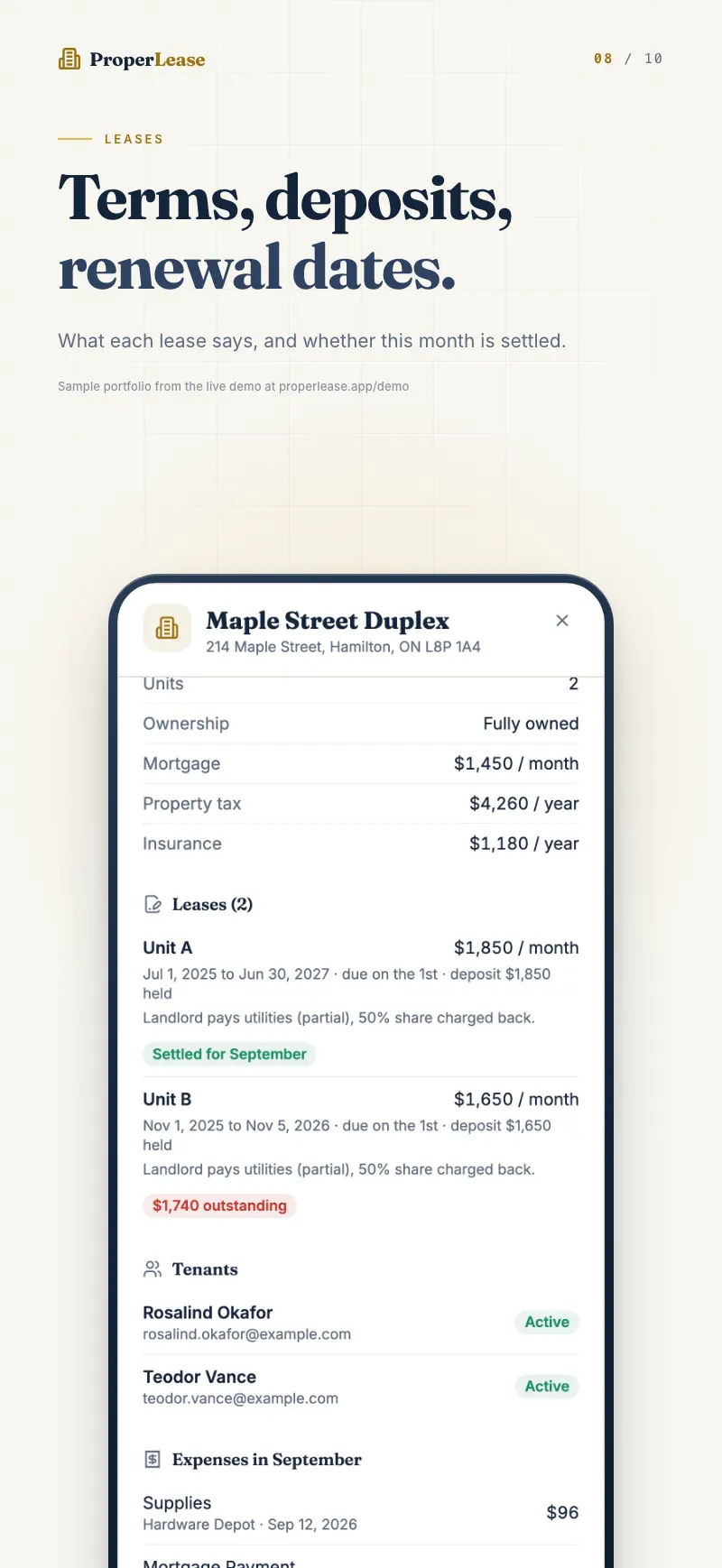
Keeping the deposit separate is the whole point. A dollar of rent is yours; a dollar of deposit is the tenant's until you have a documented reason to keep part of it.
Move in condition record
The deposit is only as defensible as the record behind it. At move in, document the condition of the unit before the tenant takes possession: note existing wear, take dated photos, and record anything already damaged. This is your baseline. Without it, you cannot later show that a mark at move out was not there at move in.
Dated photos at move in are the single most useful thing you can keep. They settle most disputes before they start, because condition is shown rather than argued.
Move out condition record
When the tenant leaves, walk the same unit and compare it against the move in baseline. Record the current condition, again with dated photos. The difference between the two records, minus normal wear and tear, is what you can reasonably consider deducting.
Normal wear and tear is not damage. Faded paint, light carpet wear, and small nail holes are typically the landlord's cost. Broken fixtures, stains beyond cleaning, and unauthorized alterations are more often chargeable. Where the line sits varies by jurisdiction.
Itemize deductions
If you keep part of the deposit, itemize it. For each deduction, record what it was for and the amount, tied to the condition record and photos that support it. A clear itemized statement is what turns a deduction from a disagreement into a documented decision. Return the remaining balance to the tenant.
ProperLease produces that statement for you. Open the tenant, choose Deposit return, and add one line per deduction with its reason and amount. The app subtracts them from the deposit recorded on the lease, shows the balance owing back, lets you set the deposit status, and generates a Security Deposit Return Statement PDF you can send to the tenant and keep on file. Note that some jurisdictions prescribe the format or the contents of this statement; this one is ProperLease's own layout, so check it meets the requirement where your property is.
The deduction list belongs to the lease, so on a joint lease every tenant shares the same list against the same deposit.
A last month's rent deposit is not a security deposit and is not settled with deductions. It is recorded separately on the lease and applied to the final month's rent; see two kinds of deposit.
If you recorded the tenant's notice to vacate, the deposit screen also suggests lines it can already work out: rent you agreed would come from the deposit, rent or charges still unpaid in the notice period, and bills that arrive after the move-out, such as the final utility bill. Each one waits for you to add it. See record a notice to vacate and track the move-out.
For a fuller walkthrough of holding and returning deposits the right way, read security deposits: hold and return.
Return on time
Most jurisdictions set a deadline for returning a deposit after move out, and some require interest or a specific statement format. Missing the deadline can cost you the right to deduct at all, even where the deduction was valid. Track the move out date and return the balance within your jurisdiction's window.
Once the deposit is settled, move the tenant to Past to close out the tenancy while keeping the full history on file.
Deposit limits, interest, condition report requirements, and return deadlines vary widely by province and state. This is general guidance, not legal advice. Confirm the rules that apply where your property is located.
Related
- Record a notice to vacate and track the move-out from the notice to the settled deposit.
- Generate a province or state lease where the deposit is first recorded.
- Add and manage tenants and move them to Past at the end.
- Handle late rent and reminders when rent, not the deposit, is the issue.
Run your rentals with absolute clarity
ProperLease helps self-managing landlords in Canada and the US track rent, generate provincial and state leases, serve notices, and stay tax ready.