Deposits cause more landlord-tenant friction than almost anything else in a tenancy. The money sits untouched for years, then a single move out turns it into an argument about what counts as damage, how much can be kept, and when it should have been returned.
Almost all of that conflict is avoidable. The landlords who never fight about a deposit follow the same discipline: collect the right amount, hold it separately, document the unit at both ends, and return it on time with a clear statement.
What a deposit is actually for
A security deposit is protection against two specific things: unpaid rent and damage beyond ordinary wear and tear. It is not a bonus, a cleaning fee, or a fund you dip into for upgrades.
That distinction decides most disputes. Ordinary wear is the gradual, expected result of someone living in the unit: faded paint, lightly worn carpet, small nail holes. Damage is what a tenant caused through negligence or misuse: a cracked counter, a hole in the wall, a stained floor. You can deduct for damage. You cannot deduct for wear.
The safest way to think about it: the deposit exists to make you whole for a genuine loss, not to fund improvements or absorb the ordinary cost of turning a unit over between tenants. If a deduction feels like an upgrade at the tenant expense, it will almost certainly be read that way in a dispute.
How much you can collect
There is no single answer, because deposit limits are set locally and vary a great deal.
- Some jurisdictions cap the deposit at one month rent, others allow more, and a few set no fixed cap.
- Some places treat a security deposit and a last month rent deposit as separate things, and some limit or bar collecting a last month rent deposit at all.
- Several jurisdictions require you to pay interest on the money you hold and to add it at renewal or return.
Collecting more than the law allows, or collecting a deposit the law does not permit, can make the term unenforceable and expose you to a penalty. Confirm your local rule before you take a cent, and record the exact amount and purpose in the lease. Our guide to what a lease must include covers how to word the deposit clause.
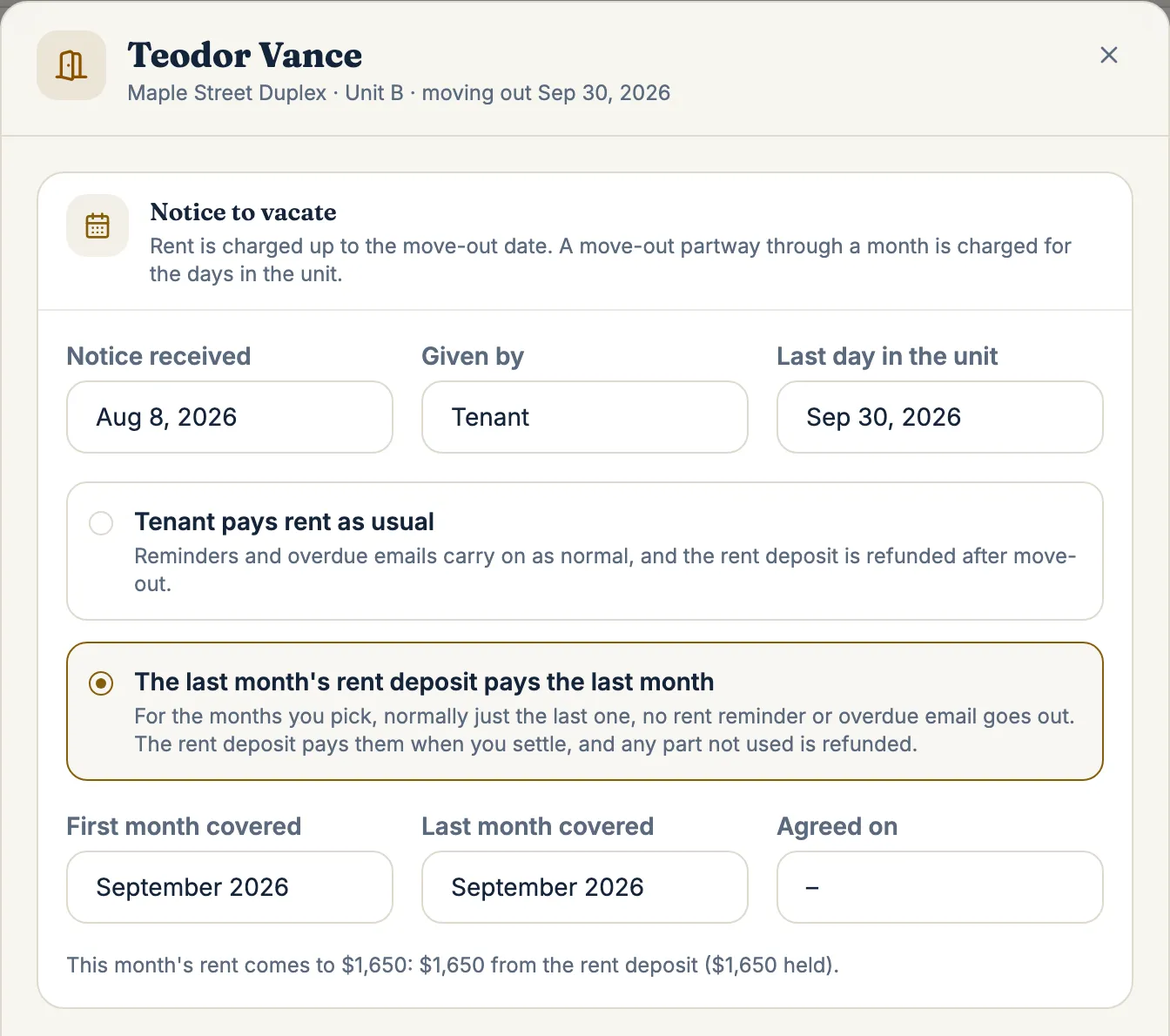
The most common deposit question comes at the end of a tenancy, not the start: a tenant gives notice and asks to use the deposit as their last month rent. Before you agree, read when a tenant gives notice, which covers what that trade really costs you and how to keep the final months straight.
Keep it separate and documented
Once collected, a deposit is money you are holding, not money you have earned. Treat it that way.
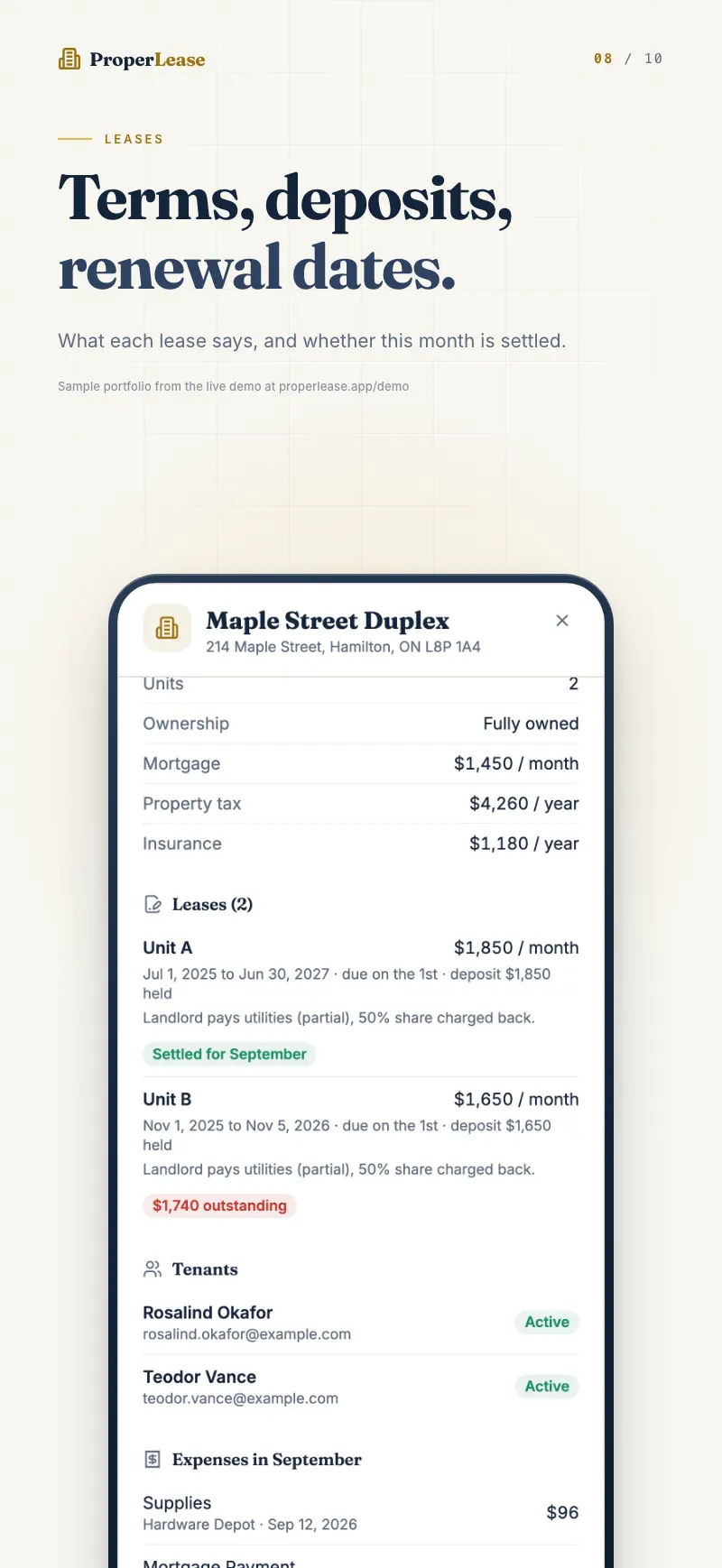
- Track the held amount on its own, distinct from your rental income, so you always know the exact balance you owe back.
- Never let deposits blend into your operating cash. When the balance is unclear at move out, you negotiate from a weak position.
- Record the date collected and the amount in writing, on the lease, where both sides can see it.
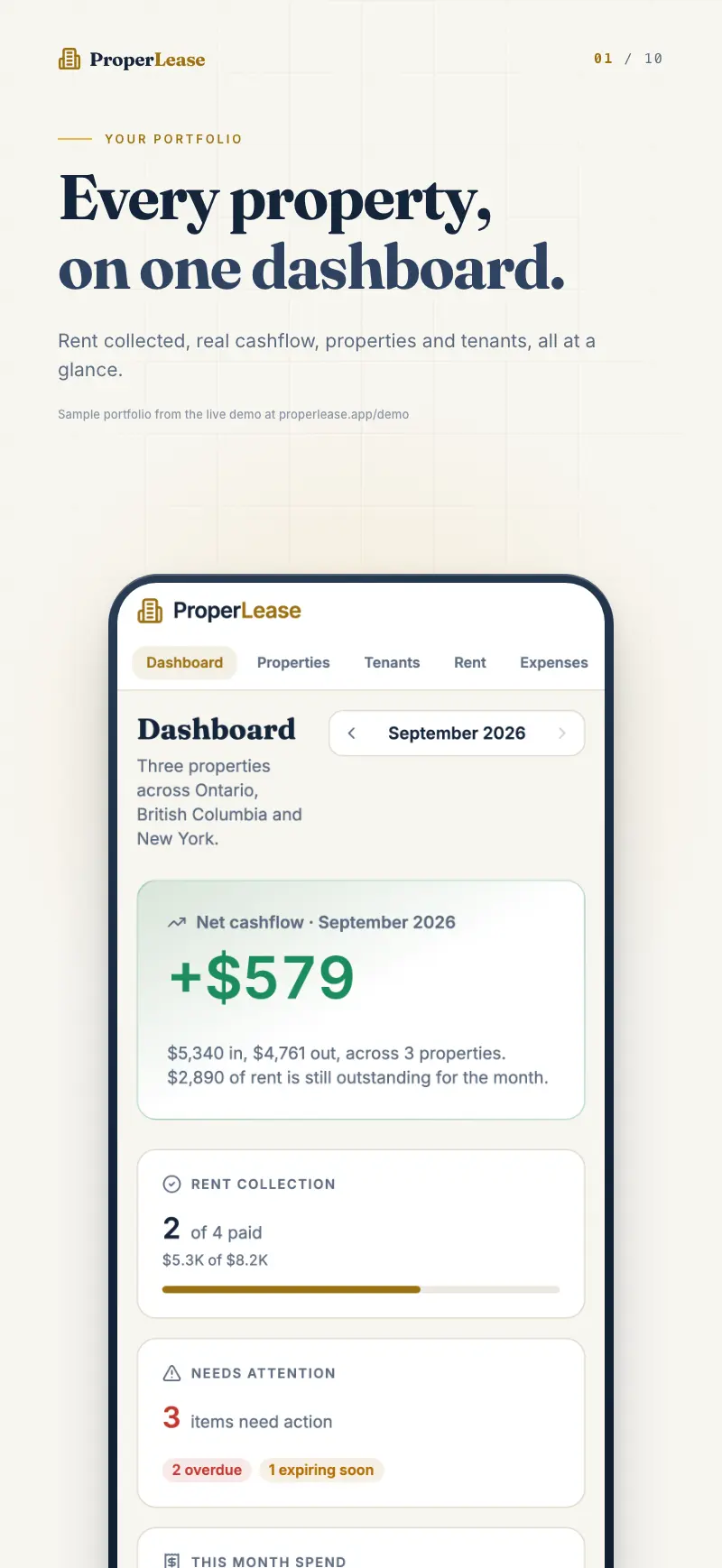
ProperLease records the deposit on each lease and tracks it separately from income, so the held amount is always visible and never mixed into what you have collected in rent.
The move in and move out record
The condition record is the single most powerful tool for avoiding a deposit dispute, and the one landlords most often skip.
At move in, walk the unit with the tenant and document its condition in detail: dated photos of every room, notes on any existing marks, and a signed record both of you agree to. At move out, repeat the exact same process. The comparison between the two is what proves whether a problem is new damage or pre existing wear.
Without a move in record, you have nothing to compare against, and a tenant can credibly claim any issue was already there. With one, most disputes end before they start because the evidence is not in doubt.
Do and do not at return time
When the tenancy ends, the return process is where good record keeping pays off. Follow it closely.
| Do | Do not |
|---|---|
| Return the deposit within the legal deadline | Miss the deadline, which can forfeit your right to deduct |
| Itemize every deduction with a written statement | Keep money without explaining why |
| Deduct only for damage and unpaid rent | Charge for ordinary wear and tear |
| Attach photos and receipts as evidence | Estimate costs with no documentation |
| Pay any interest the law requires | Forget interest where it is owed |
| Send the balance to a confirmed address | Delay because you do not have the tenant address |
Return it on time, with a clear statement
The deadline to return a deposit is set by law and varies widely, often somewhere between two and six weeks after the tenant moves out. Missing it is one of the most expensive mistakes a landlord can make, because in many places a late return means you owe the full amount back no matter what damage occurred, sometimes with an added penalty.
When you do deduct, send an itemized statement: what you kept, why, and the evidence behind each line. A clear statement backed by your move in and move out records turns what could be a formal dispute into a routine closeout.
This is general information, not legal advice. Deposit caps, interest rules, last month rent deposit rules, and return deadlines differ by province and state and change over time. Confirm the requirements where your property is located, or consult a local professional, before you act.
Tracking the held amount from the day you collect it is what makes all of this simple. To see how deposits are recorded and returned in the app, read security deposits, or start with ProperLease and keep every deposit accounted for from day one.
Frequently asked questions
How much can I collect as a security deposit?
It depends entirely on your jurisdiction. Some places cap it at one month rent, some allow more, and some limit or bar a separate last month rent deposit. Check the rule where your property is before you collect anything.
Can I keep the deposit to cover normal wear and tear?
No. A deposit covers unpaid rent and damage beyond ordinary use. Faded paint, worn carpet, and small nail holes are normal wear, and deducting for them is one of the fastest ways to lose a dispute.
How long do I have to return a deposit?
Return deadlines are set by law and vary widely, often between 14 and 45 days after move out. Miss the deadline and you can owe the full amount back, sometimes with a penalty, regardless of any damage.
Run your rentals with absolute clarity
ProperLease helps self-managing landlords in Canada and the US track rent, generate provincial and state leases, serve notices, and stay tax ready.