When rent is late, the instinct is to act fast. But in a tenancy, acting fast the wrong way sets you back further than doing nothing. A notice served on the wrong form, missing a required detail, or delivered improperly is usually invalid, and an invalid notice means you start the whole process again from the beginning.
This is how to serve a late rent or eviction notice correctly: the sequence to follow, what the notice must contain, and the proof of service that decides whether your case stands.
Why the form and delivery method matter
A notice is a legal document with two jobs: it must say the right things, and it must reach the tenant in a way you can prove. Fail either and the notice carries no weight.
Every jurisdiction publishes its own required forms and its own accepted delivery methods, and they are not interchangeable. A form that is correct in one province is invalid in the next. Handing a notice to a tenant in person may satisfy the rule in one place and not another. Before you serve anything, confirm the exact form and the exact delivery method your jurisdiction requires.
Getting this wrong is not a minor setback. If the form or the delivery is defective, the notice is treated as if it never happened, and the clock on any tribunal application resets. Weeks of unpaid rent can pass before you realize the process has to begin again, which is exactly why the details are worth checking twice.
The sequence from reminder to formal notice
Escalation done properly moves in steps. Each one gives the tenant a chance to fix the problem and gives you a cleaner record if it goes further.
- Send a reminder. A dated, friendly reminder often resolves a late payment on its own. It also shows you acted reasonably before escalating.
- Serve the correct formal notice. If the reminder goes unanswered, serve the official notice for non payment. In Ontario, for example, that is the N4, Notice to End a Tenancy Early for Non-payment of Rent. Every province and state uses a different form, so use the one for your jurisdiction.
- Observe the cure period. The notice gives the tenant a set number of days to pay the arrears and void the notice. You cannot skip or shorten it.
- Apply to the tribunal or court. Only if the tenant neither pays nor leaves within the period may you apply to the appropriate body to end the tenancy. A decision maker, not you, ends the tenancy.
For the broader strategy around late payments, see how to handle late rent.
Required contents and timelines
A valid notice is specific. Whatever the form, it generally must state:
- The tenant name and the rental address, exactly.
- The amount owed, broken down by period, with no arithmetic errors.
- The date by which the tenant can pay to void the notice, or the date the tenancy would end.
- The reason for the notice, matched to the correct legal ground.
- Your name and how the tenant can reach you.
- The date of service and, where required, the form of an official signature.
A single wrong figure or a miscalculated deadline can invalidate the entire notice, so check every detail against the source before you serve it.
Keep proof of service and an audit trail
Serving the notice is only half the job. If you cannot prove the tenant received it, on what date, and by what method, a tribunal may treat it as never served.
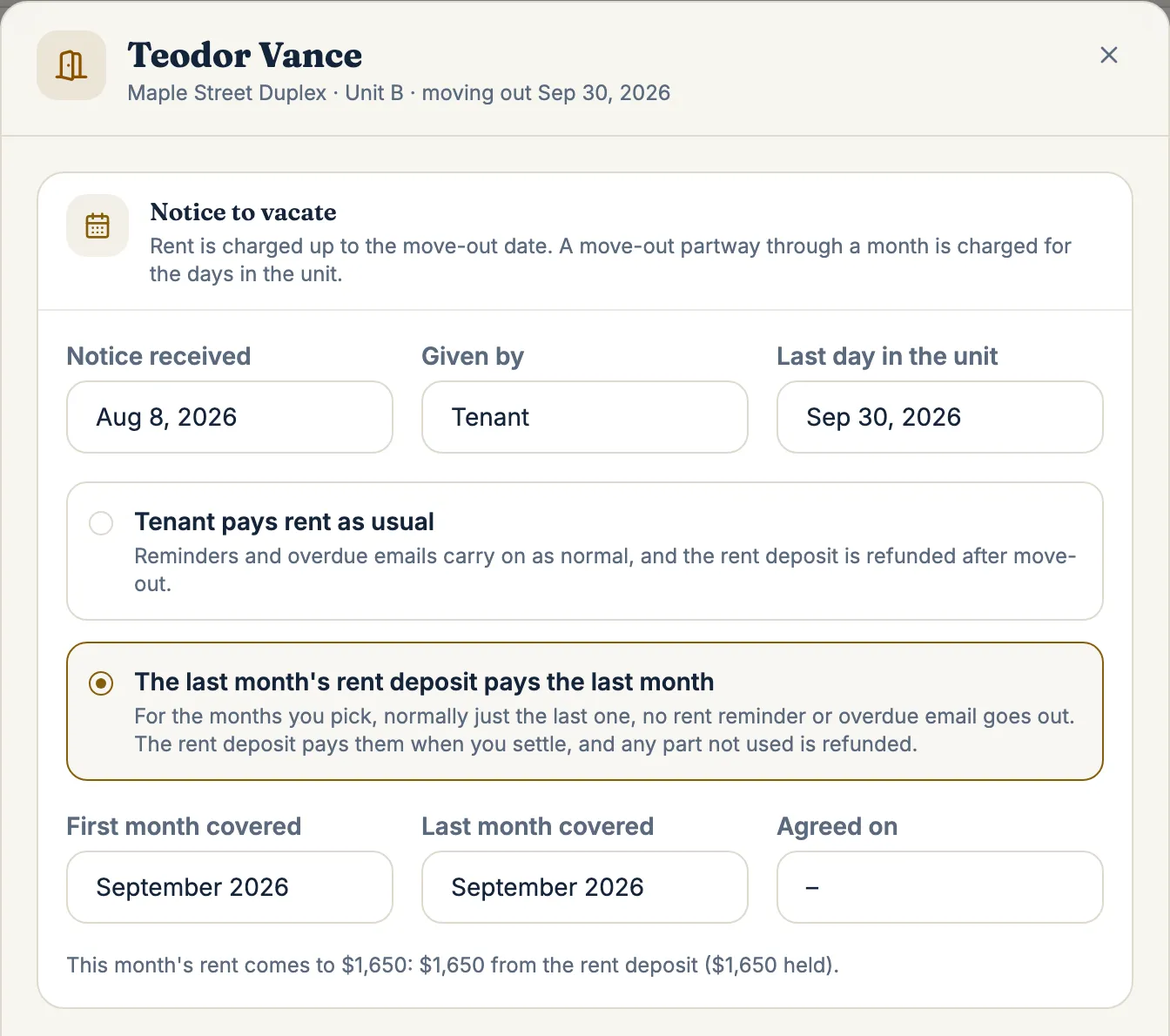
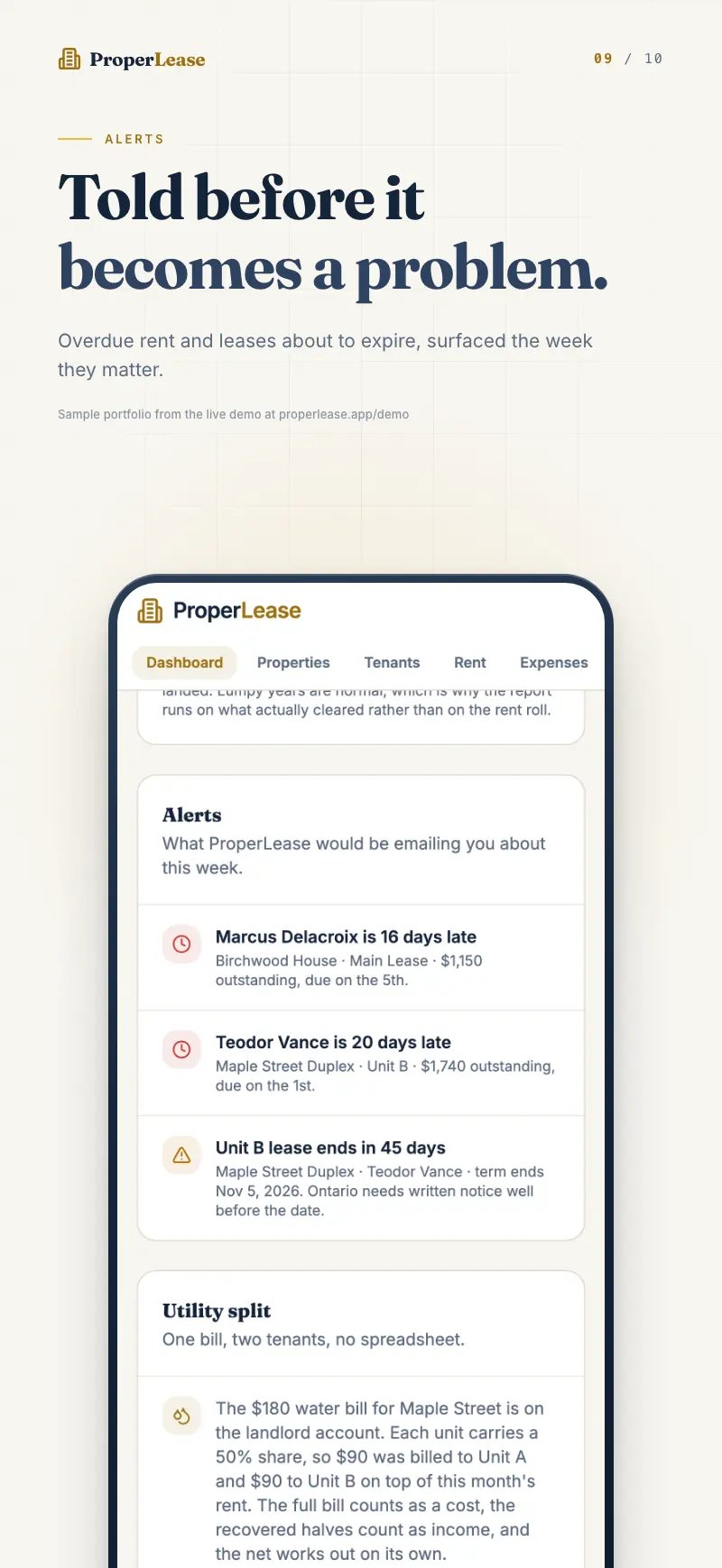
Keep a record of every step: the reminder you sent, the notice you served, the delivery method, and the date. ProperLease creates dated late rent, eviction, and lease violation notices, generates a PDF, and attaches it to the email so the document and the delivery are recorded together. Those are its own written notices, not the statutory form your tribunal publishes, so treat them as the documented warning and get the official form from the tribunal when you reach that step. Every notice is kept in an audit trail, and the notifications log records each email sent, including lease expiry alerts, so your timeline is written as it happens rather than reconstructed later.
What not to do
The fastest way to turn a rent problem into a legal liability of your own is to take matters into your own hands.
Changing the locks, removing a tenant belongings, shutting off heat, water, or power, or intimidating a tenant into leaving is illegal in nearly every province and state. These self help evictions can trigger significant penalties and damages against you, even when the tenant genuinely owes rent. The only lawful way to remove a tenant is through the proper notice and tribunal or court process.
Beyond lockouts, avoid these common missteps:
- Serving a notice with the wrong amount or a bad deadline.
- Using a generic template instead of the official form.
- Delivering the notice a way your jurisdiction does not accept.
- Applying to the tribunal before the cure period has expired.
- Accepting partial rent without understanding how it may reset the notice.
Do it right the first time
A late rent or eviction notice only works when the form is correct, the contents are exact, the delivery is proper, and the whole sequence is documented. Get any one of those wrong and you hand the tenant a defense and hand yourself a delay.
This is general information, not legal advice. Required forms, notice periods, delivery methods, and eviction procedures differ by province and state and change over time. Confirm the process where your property is located, or consult a local professional, before you serve any notice.
To see how notices are generated, served, and stored with a full audit trail, read serve a notice, or start with ProperLease and keep every notice on the record from the first reminder.
Frequently asked questions
Can I skip the reminder and go straight to a formal notice?
You can, but a dated reminder first often resolves the late payment without escalation and shows you acted in good faith. When you do serve a formal notice, it must be the correct form for your jurisdiction and delivered the correct way.
What happens if I use the wrong form?
A tribunal or court can dismiss your case outright. A notice on the wrong form, missing required details, or served improperly is usually invalid, which means you start the entire timeline over from zero.
Can I change the locks if a tenant will not pay or leave?
No. Self help eviction, including changing locks, removing belongings, or shutting off utilities, is illegal almost everywhere and exposes you to serious penalties. Only the proper legal process can remove a tenant.
Run your rentals with absolute clarity
ProperLease helps self-managing landlords in Canada and the US track rent, generate provincial and state leases, serve notices, and stay tax ready.