Late rent is stressful because it feels personal and urgent at the same time. It does not have to be either. The landlords who handle it best treat it as a process: a calm sequence of steps, each one documented, that starts friendly and escalates only as far as it needs to.
This playbook walks through that sequence, from the first day rent is late to a formal notice if it comes to that. The through line is documentation, because the step that protects you is the one you can prove you took.
Days 1 to 5: assume it is a simple oversight
Most late rent is not a crisis. A tenant forgot, a transfer failed, or life got busy. Your first move should match that reality: a short, friendly reminder, not a warning.
Keep it factual and warm. Rent has not arrived yet, here is the amount, here is how to send it. No accusation, no threat. Sending this promptly, ideally the day after rent is due, does two things at once. It jogs the honest tenant into paying, and it starts your record with a dated, professional first contact.
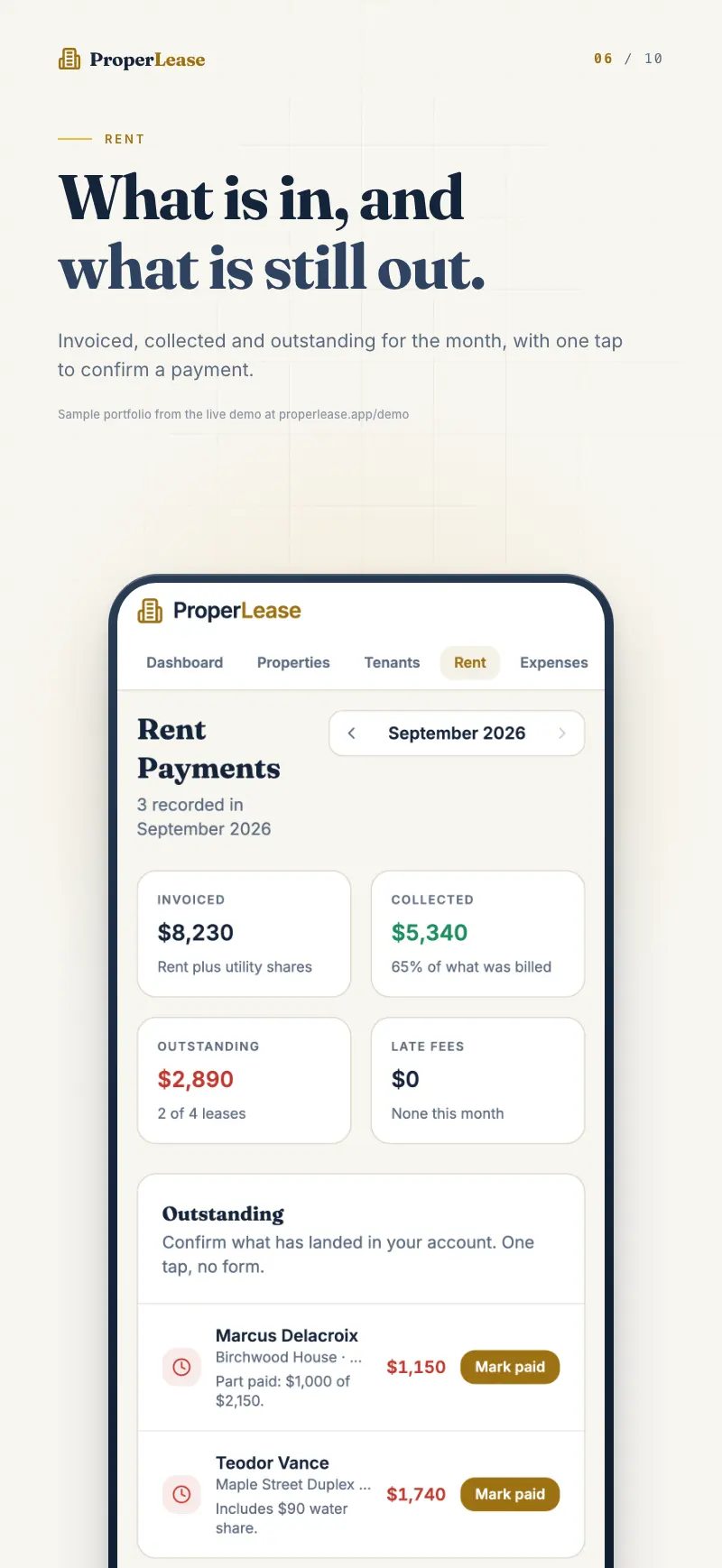
If your reminders are automatic, this step happens without you lifting a finger, and it happens on time every month. That consistency is what turns most late payments back into on-time ones before they ever become a problem. If you have not set up a repeatable process yet, start with a rent collection system.
Grace periods and late fees, done correctly
Before you escalate, know your own rules. Two things vary by jurisdiction and by lease, and getting them wrong undermines everything that follows.
- Grace period. Some leases and some jurisdictions allow a short window after the due date before rent is officially late. If yours does, honor it. If it does not, do not invent one.
- Late fees. Whether you can charge a late fee, and how much, depends on your province or state. Several jurisdictions cap or prohibit them outright. A fee is only enforceable if local law permits it and the lease states it in advance.
Rent rules are set at the provincial or state level and they differ widely. What is allowed in one place may be illegal in another. Confirm the rule for your jurisdiction before applying a late fee or setting a deadline, and when in doubt, keep the amount you demand to the rent actually owed.
When to send a formal late notice
If the friendly reminder and your grace period both pass with no payment and no response, it is time for a formal written notice. This is a different document with a different tone: still professional, but clear that rent is overdue and that a process is now underway.
A formal notice should state the amount owed, the date it was due, and what happens next. In ProperLease you generate a late rent notice from Notices, a PDF is produced and attached to the email sent to the tenant, and the whole exchange is logged with a timestamp. That last part matters more than the letter itself.
The handle late rent guide covers the mechanics inside the app step by step.
Document everything, always
If late rent ever reaches a tribunal or a courtroom, the case turns on evidence. Not on what you remember, but on what you can prove. That means every contact, in order, with dates:
| Step | What to keep |
|---|---|
| Rent due | The lease showing the amount and due date |
| First reminder | A dated copy of the message you sent |
| Late fee, if any | The lease clause allowing it and the date applied |
| Formal notice | The notice document and proof it was sent |
| Payment or non-payment | The ledger showing what came in and when |
A system that logs each email and notice automatically gives you this trail without extra effort. Every reminder and every notice lands in an audit log with the date it was sent, so when someone asks what happened, the answer is already written down.
The path to a formal legal notice
If a tenant still has not paid after your formal notice, the final step is a jurisdiction-specific legal notice that begins the process to end the tenancy. In Ontario, for example, this is the N4, the official notice for non-payment of rent, which gives the tenant a set number of days to pay before you can apply to the Landlord and Tenant Board.
The N4 is one example, not a universal form. Every province and state has its own required notice, its own timelines, and its own filing process. Use the correct form for where the property is, follow the stated waiting periods exactly, and do not skip steps, because a defective notice can reset the entire process.
For a deeper walkthrough of serving these documents correctly, read serving a late rent or eviction notice.
Handled this way, late rent stays manageable. You start kind, you escalate only as far as each case requires, and at every step you build the dated record that keeps you protected if it ever goes further.
Frequently asked questions
How many days late should rent be before I take action?
Send a friendly reminder as soon as rent is a day or two late, since most late rent is simple forgetfulness. If there is no response and no payment after your lease grace period, move to a formal written notice.
Can I charge a late fee on rent?
It depends on your province or state and what your lease says. Late fees are capped or prohibited in some jurisdictions, so check local rules and make sure any fee is written into the lease before you charge it.
What is an N4 notice?
In Ontario, the N4 is the official notice to end a tenancy for non-payment of rent. It gives the tenant a set number of days to pay before the landlord can apply to the tribunal. Other jurisdictions have their own equivalent forms.
Why does documenting late rent matter so much?
If a dispute reaches a tribunal or court, you must prove what was owed, what you sent, and when. A dated audit trail of reminders and notices is often the difference between winning and losing that case.
Run your rentals with absolute clarity
ProperLease helps self-managing landlords in Canada and the US track rent, generate provincial and state leases, serve notices, and stay tax ready.