Ask a landlord how a property is doing and most will answer with the rent: twenty two hundred a month, paid on time. That number feels like success, but it is only the top line. Real cashflow is what stays in your pocket after the property has taken its cut, and the gap between the two is where profit quietly disappears.
This is a guide to measuring that gap correctly, per property, every month, so you know which door pays you and which one only looks like it does.
Rent collected is not profit
Collected rent is revenue. Profit is what is left after the property pays its own bills. Between the two sits a stack of costs that never shows up on the rent roll:
- Mortgage payment. The largest monthly outflow for most landlords, and the one people mentally exclude because it builds equity.
- Property tax. A fixed annual cost that rises most years and is easy to forget between installments.
- Insurance. Small per month, real over a year, and climbing fast in most markets.
- Utilities you cover. Water, heat, or hydro on a unit you pay for is money you rarely recover from rent.
- Maintenance. Irregular and easy to underweight, but a single furnace or roof repair can erase months of margin.
- Vacancy. The rent you did not collect while a unit sat empty still has to carry every fixed cost above.
Miss any one of these and your mental math runs optimistic. Count all of them and you have real cashflow: the honest answer to whether a property earns its keep.
The costs that erode margin, one by one
The dangerous costs are not the dramatic ones. They are the steady leaks. A mortgage renewal at a higher rate adds a few hundred a month. A tax reassessment nudges the bill up. Insurance renews ten percent higher. None of these announce themselves, and none change the rent, so the top line looks unchanged while the bottom line thins out.
Utilities deserve special attention. If you cover heat on an older building through a cold winter, that cost can swing hundreds month to month. Landlords who do not track it as a line item simply absorb it and wonder why the year felt tighter than the rent suggested.
Paying down mortgage principal builds wealth, and that is a genuine return. It is not money you can spend this month, though. Keep the two ideas separate: cashflow tells you if the property sustains itself today, equity tells you what you are building for later. Confusing them is how a cash negative property gets called a good investment for years.
Why per property numbers reveal the weak performer
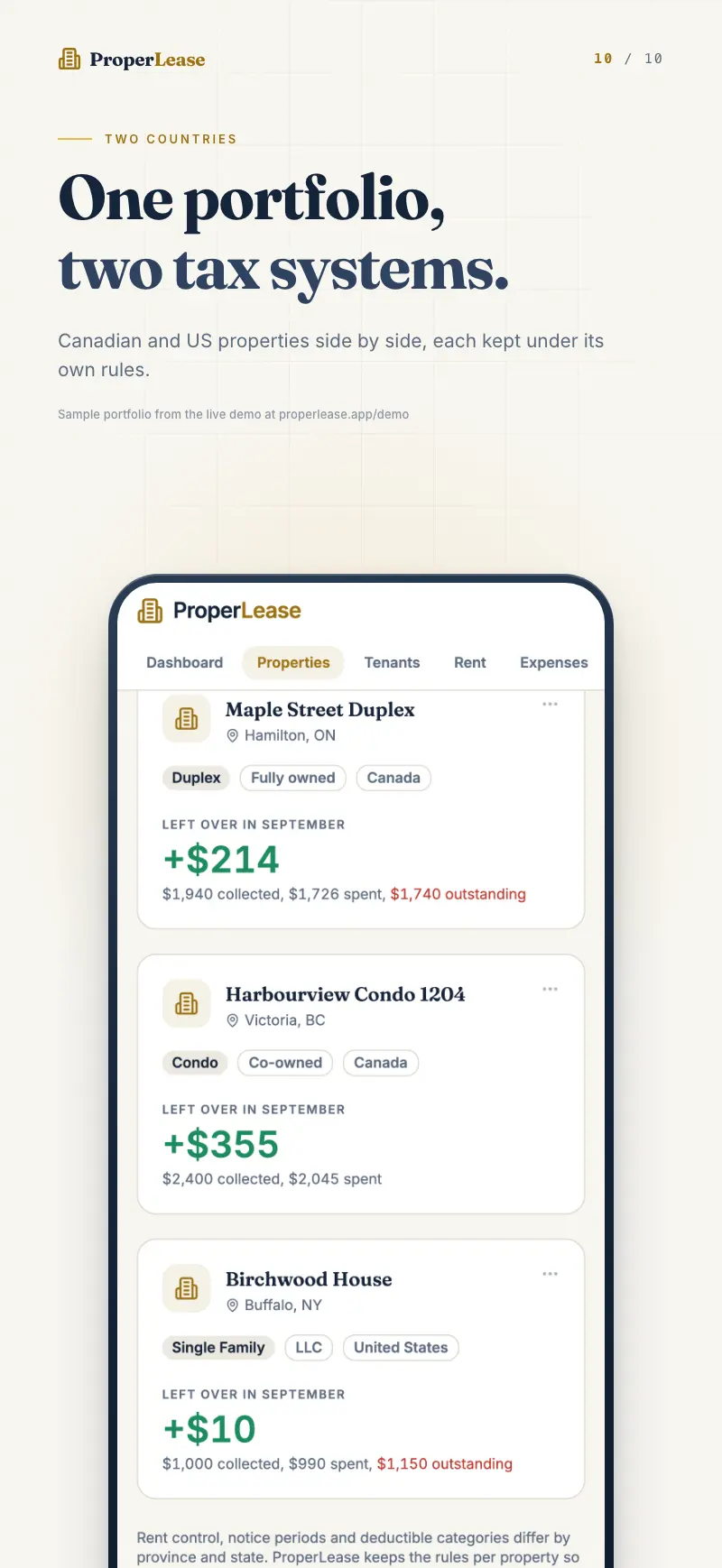
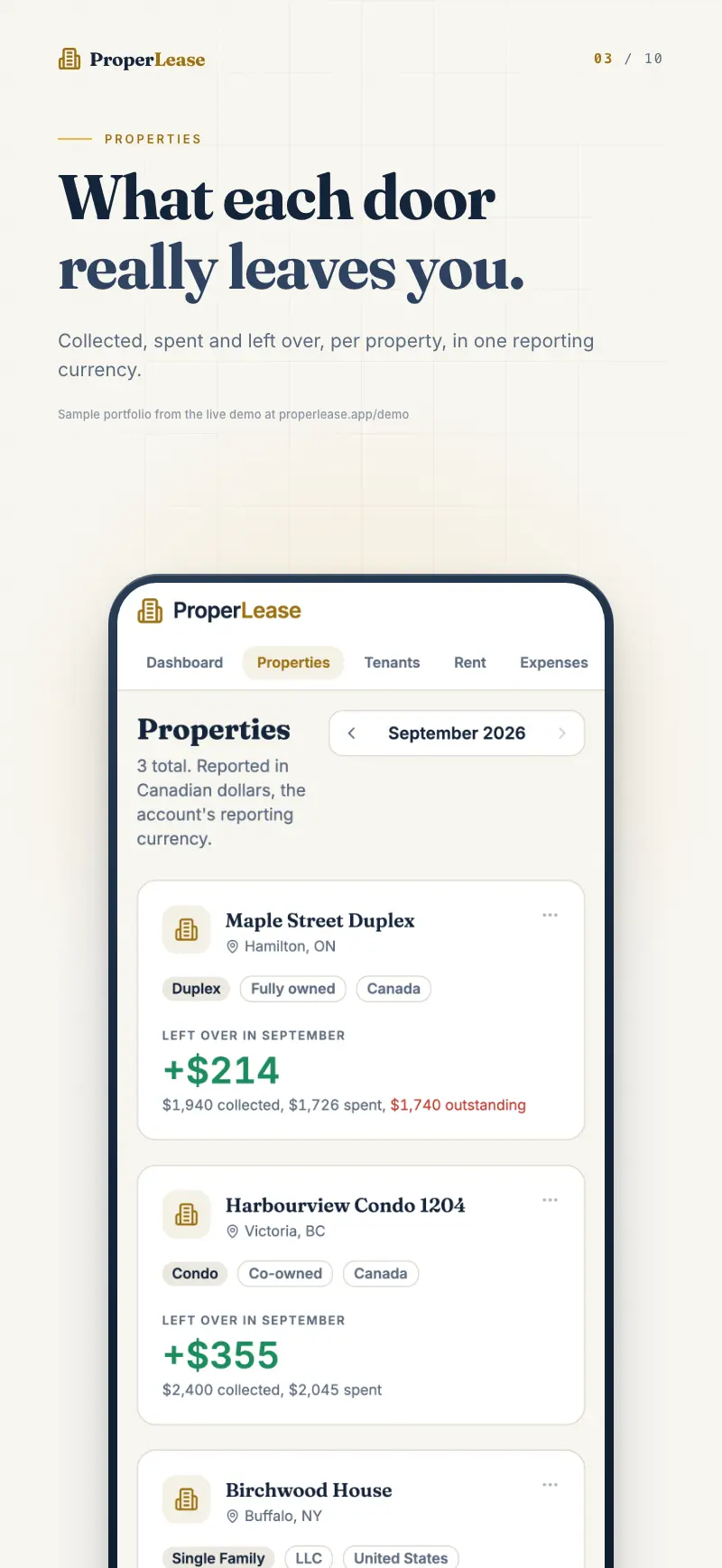
A portfolio total is comforting and misleading. Three properties that net a healthy sum together can hide one unit that loses money every month, carried by the other two. You will never see it in the combined figure. You see it the moment you break cashflow out per door and line the numbers up.
Per property, or per door, is the unit of truth. It tells you which building to refinance, which rent is overdue for an increase, and which property to consider selling. It also tells you where a rising cost is concentrated, so you fix the actual problem instead of raising rent across the board.
How to calculate cashflow correctly
The formula is simple. The discipline is in counting every cost and doing it per property:
Real cashflow = rent collected − mortgage − property tax − insurance − utilities − maintenance
In ProperLease you do not run this by hand. Add the purchase details and the mortgage, property tax, insurance, and utilities figures on the property form, and the Actual Cashflow view on the property detail computes income minus those expenses automatically. Maintenance flows in from jobs you log, and expenses can auto create from a maintenance job with a deductible tag attached. The number updates as real payments and costs land, so it reflects this month, not last year's estimate.
Here is a worked example for a single condo renting at 2,200 a month.
| Line | Monthly | Notes |
|---|---|---|
| Rent collected | +2,200 | Paid in full this month |
| Mortgage payment | −1,240 | Full payment, principal and interest |
| Property tax | −260 | Annual bill divided by twelve |
| Insurance | −85 | Landlord policy |
| Utilities covered | −120 | Water and a shared heating cost |
| Maintenance | −150 | Averaged from the year's jobs |
| Real cashflow | +145 | What actually stays with you |
The rent said 2,200. The truth is 145. That property is positive, but thin, and one vacant month wipes out a year and a half of it. Only the full calculation tells you that.
Read it monthly, not at year end
Most landlords discover their real numbers once a year, when the tax reports come out and the surprise is already twelve months old. By then a unit that turned negative in February has bled through the whole year with nothing you can do about it.
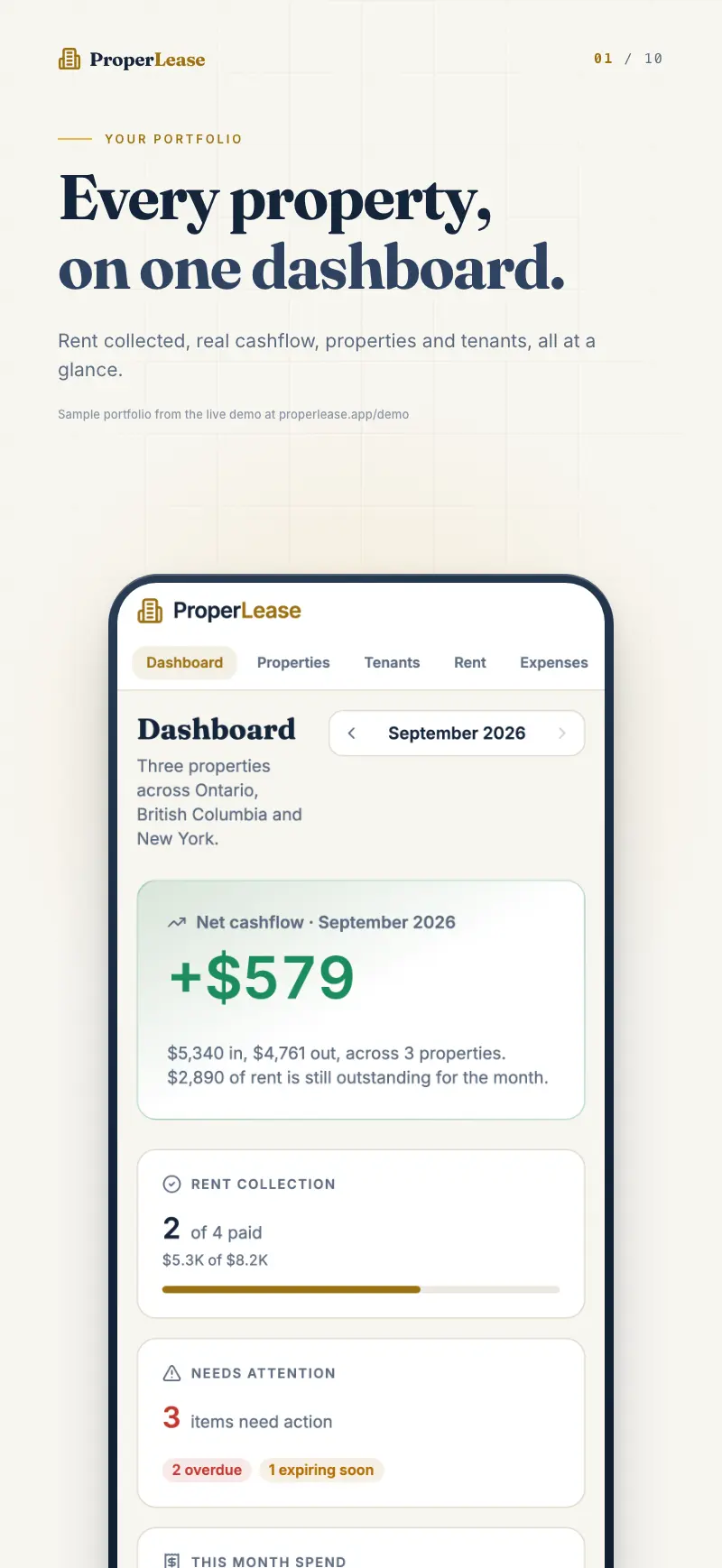
Reading cashflow monthly changes the job from autopsy to early warning. When insurance renews higher or a utility bill spikes, you see the margin move the same month and can respond: raise the rent at renewal, shop the insurance, or fix the leaking cost. The dashboard rolls every property's cashflow into one view across This month, Last month, and Year to date, so a five second check tells you whether anything moved.
Where it pays off
Knowing real cashflow per door changes decisions. You stop guessing which property to sell, when to raise a rent, and whether a renovation earns its cost. The same figures that tell you profit also feed your taxes: because ProperLease already separates mortgage interest from principal and tags deductible expenses, the T776 or Schedule E report comes out aligned by property with no extra work.
Start with one property. Add the mortgage, tax, insurance, and utilities figures, and watch the Actual Cashflow view fill in the real number. For the full method, see real cashflow per property, then create an account and give every door an honest answer.
Frequently asked questions
What is the difference between rent collected and cashflow?
Rent collected is the money that arrives. Cashflow is what remains after mortgage, property tax, insurance, utilities, and maintenance are paid. A property can collect rent every month and still lose money once those costs are counted.
Why measure cashflow per property instead of for the whole portfolio?
A portfolio total hides the weak unit. One property can quietly drain the profit of two strong ones, and you only see it when you break the numbers out per door and compare them side by side.
Should I count mortgage principal as an expense?
For cash in hand, yes, the full mortgage payment leaves your account each month. For taxes, only the interest portion is deductible, which is why ProperLease tracks the payment for cashflow and separates interest for your T776 or Schedule E.
How often should I check cashflow?
Monthly. Reading it once a year at tax time means a bad unit runs for eleven months before you notice. A monthly glance catches a rising cost or a slipping rent while you can still act.
Run your rentals with absolute clarity
ProperLease helps self-managing landlords in Canada and the US track rent, generate provincial and state leases, serve notices, and stay tax ready.