Most landlords think of rent collection as a monthly chore: wait for the money, notice who is short, send a text or two. That works until it does not. A rent collection system flips the model. You decide the rules once, record each payment as it lands, and let the software watch the calendar so you are not the one doing the chasing.
This is not about being strict for its own sake. It is about removing the friction and forgetfulness that turn an occasional late payment into a chronic one.
Start with clear due dates and methods
Ambiguity is the enemy of on-time rent. If a tenant is not certain when rent is due, or how you want to receive it, you have handed them a reason to pay late. Fix both in the lease and never leave them to memory.
- One due date. Rent is due on the first, or whatever date the lease states, every month. Do not float it.
- One or two payment methods. Name them explicitly: e transfer, bank transfer, ACH, or cash. Fewer methods mean fewer places a payment can get lost.
- A grace period, if any, in writing. If your jurisdiction or lease allows a short grace window, state the exact number of days so there is no argument later.
The goal is that a tenant never has to ask when or how. When the answer is already written down, paying on time becomes the path of least resistance.
Record every payment against the right lease
A collection system is only as good as its ledger. The moment rent arrives, log it: choose the tenant, the amount, the date, and the method. In ProperLease this is a one-tap entry in Payments, and it pairs the payment to the correct tenant and lease automatically.
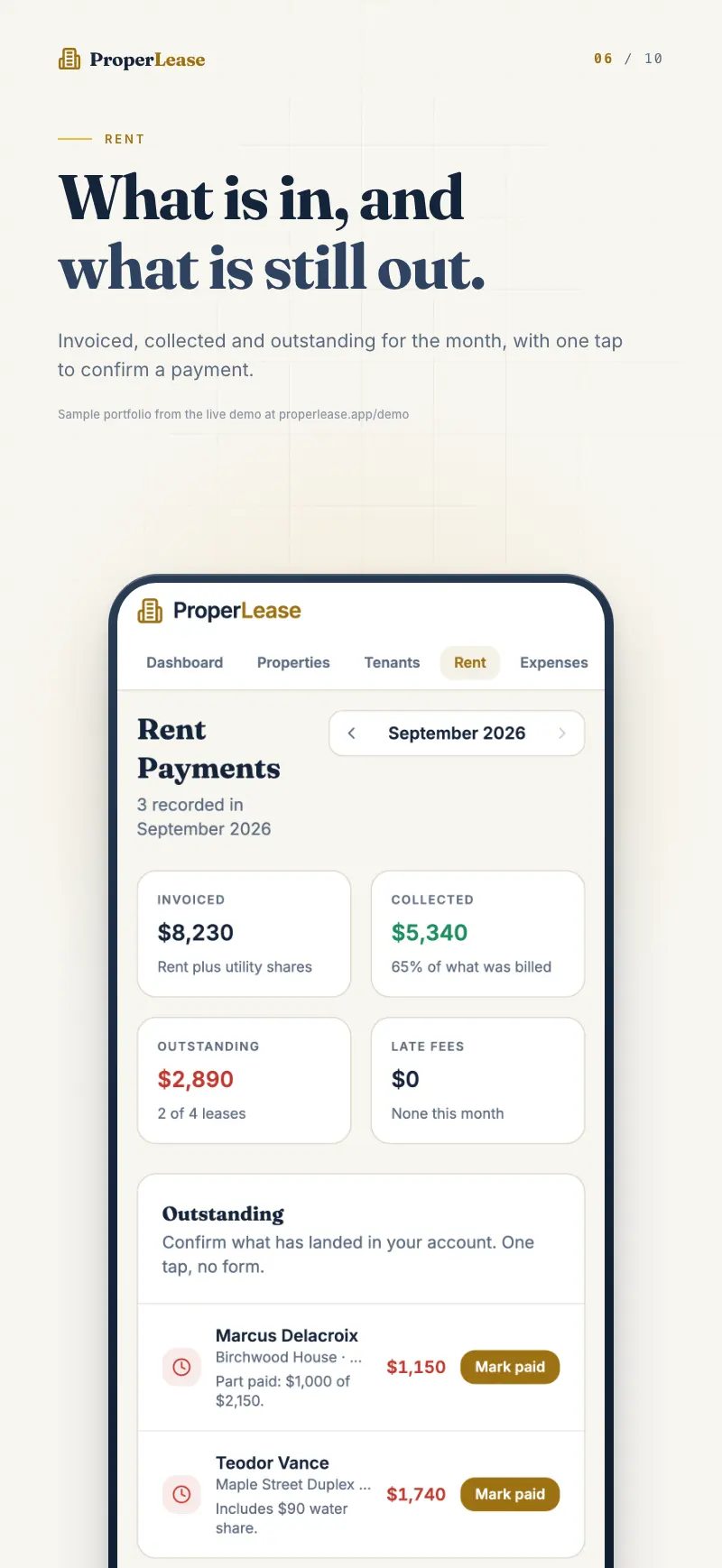
Why the pairing matters: rent recorded against a specific lease is what lets every other number stay honest. The tenant's status flips to Paid, the month is marked collected, and the dashboard updates without you touching a second screen. Skip this step and you are back to guessing at month end. For a step-by-step walkthrough, see record rent payments.
Noting whether rent came by e transfer, ACH, or cash takes one extra tap and pays off later. When a tenant disputes a payment, or you are reconciling against your bank, the method is often what settles the question.
Let reminders do the chasing
The single biggest change you can make is to stop chasing rent by hand. Automatic reminders remove the awkward part of the job and, more importantly, they are consistent in a way a busy human never is.
A good reminder cadence has two halves:
- Before the due date. A gentle nudge a few days out catches the tenant who simply forgot. This alone prevents a large share of late payments.
- After the due date. If rent has not been recorded, a prompt follow up goes out on schedule. No lecture, no delay, just a clear note that rent is now outstanding.
Because the reminders fire off the payment record, they stop the instant you log the rent. A tenant who already paid never gets a nagging message, which keeps the good tenants happy while the system quietly handles the forgetful ones.
Read collected vs expected at a glance
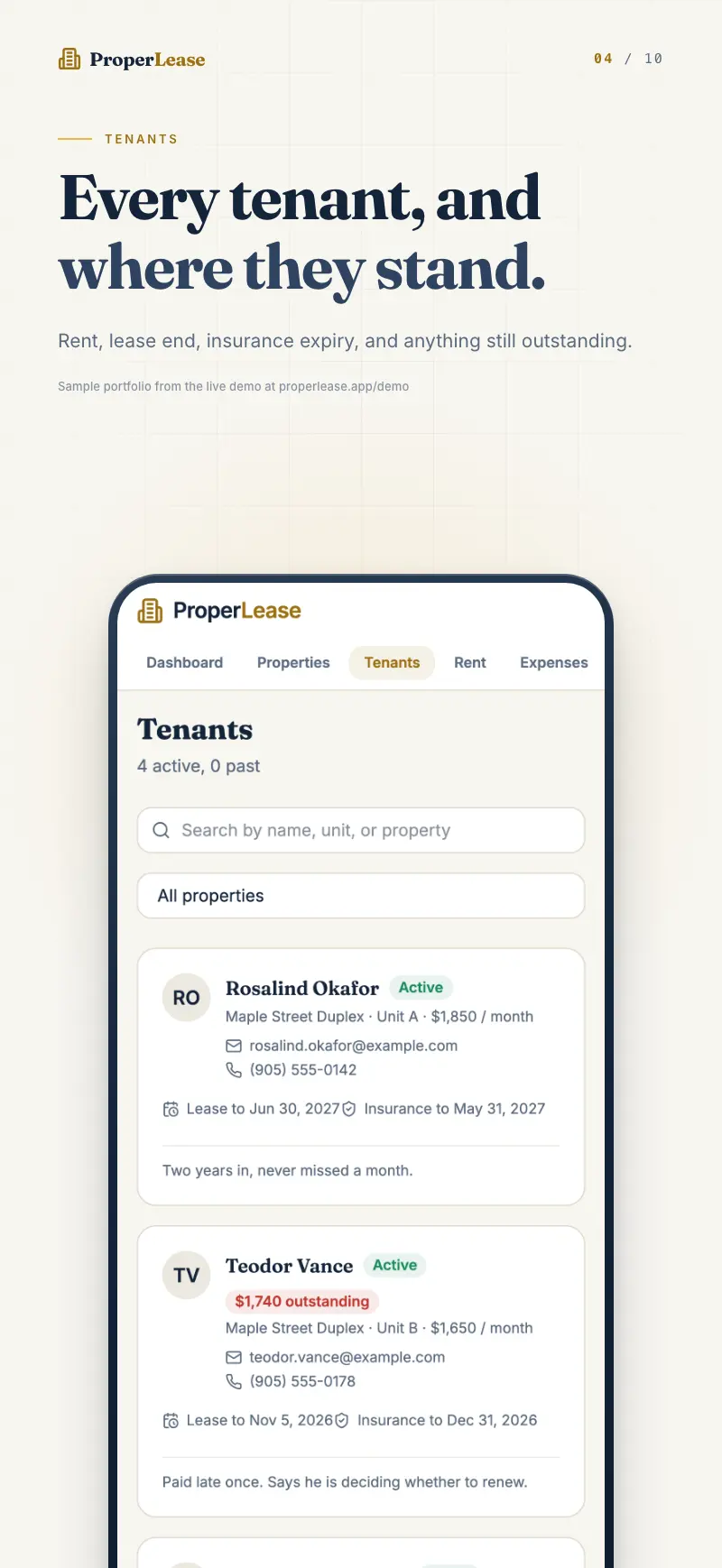
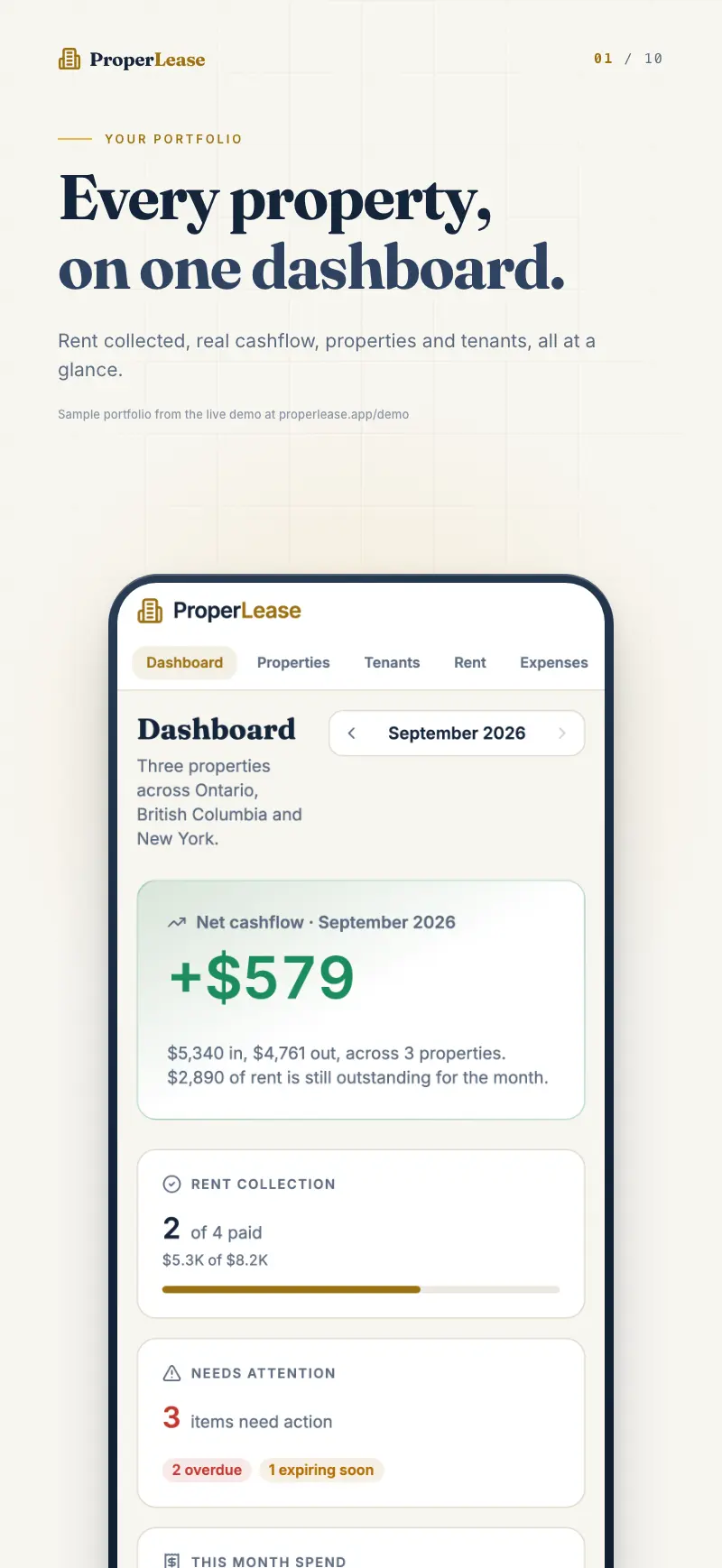
A system should answer one question without any effort on your part: who is behind, right now. That is the difference between expected rent and collected rent, and it should be visible on the dashboard, not reconstructed at month end.
| What you see | What it tells you |
|---|---|
| Collected vs expected | Exactly how much of this month's rent is in, and how much is still out |
| Tenant status (Paid, Behind, Overdue) | Who to follow up with, with days overdue attached |
| This month / Last month / Year to date | Whether a late payment is a one-off or a pattern |
| Net cashflow | What is actually left after expenses, not just rent in |
When collected against expected is a live figure, you stop discovering shortfalls a week too late. You see the gap the day it opens and act while it is still small.
Reduce chronic lateness for good
The tenant who pays late every single month is rarely broke. More often they have learned that late carries no consequence, because follow up is slow and inconsistent. A system changes the incentive without any confrontation from you.
When reminders are automatic, follow up is immediate, and every payment is dated in a permanent record, the tenant sees that lateness is noticed instantly and documented. That alone straightens out most chronic cases. For the ones it does not, you already have the clean, dated history you need to escalate. Read how to handle late rent for the full playbook once a payment slips past the reminder stage.
The point of a rent collection system is not to be tougher on tenants. It is to make on-time payment the default and to make your own follow up effortless and consistent. Set the rules once, record every payment, and let the calendar do the rest.
Frequently asked questions
What is the best way to collect rent from tenants?
Pick one or two methods you can verify, such as e transfer or bank transfer, name them in the lease, and record every payment against the tenant the day it arrives. Consistency and a clear record matter more than the specific method.
How do I stop tenants from paying late every month?
Set a fixed due date, send an automatic reminder a few days before it, and follow up promptly the day rent is late. Chronic lateness usually fades once the tenant sees that payments are tracked and follow up is immediate.
Should I let tenants pay rent in cash?
Cash is legal but hard to prove. If you accept it, record the payment immediately with the date and amount so both you and the tenant have a receipt, and be aware that a paper trail is much weaker than an electronic transfer.
Run your rentals with absolute clarity
ProperLease helps self-managing landlords in Canada and the US track rent, generate provincial and state leases, serve notices, and stay tax ready.